Quick Navigation
A Comprehensive Guide to Reproduction and Genetic.
Reproduction and genetics form the bedrock of biological sciences. Understanding how life perpetuates through different reproductive strategies and how traits are architected through genetic inheritance is essential for grasping more complex biological systems. Beyond the classroom, these concepts are fundamental to fields like medicine, agriculture, and biotechnology, where manipulating genetic material can lead to life-saving treatments and improved crop yields.
Mastering these lecture briefs is particularly important because they align directly with your lecturer's specific focus areas. This guide provides an in-depth exploration of general reproduction, Mendelian laws, and evolutionary theories. By breaking down these high-level concepts into digestible sections, you will be better prepared to tackle both theoretical questions and practical applications in your upcoming assessments.
The Fundamentals of General Reproduction
Reproduction is the biological process by which living organisms give rise to offspring, ensuring the continuation of their species. In the biological world, this occurs through two primary channels: sexual and asexual reproduction.
1. Reproduction in Plants
Plants utilize both sexual and asexual methods to ensure the continuity of life.
The Fundamentals of General Reproduction
Reproduction is the biological process by which living organisms give rise to offspring, ensuring the continuation of their species. In the biological world, this occurs through two primary channels: sexual and asexual reproduction.
1. Reproduction in Plants
Plants utilize both sexual and asexual methods to ensure the continuity of life.
A. Sexual Reproduction in Plants
This process involves the fusion of two haploid cells called gametes, produced from male and female organisms. These gametes are produced by meiosis and, upon fusion, create a diploid zygote. The union of these gametes is known as syngamy, while the entire process is termed fertilization.
This process involves the fusion of two haploid cells called gametes, produced from male and female organisms. These gametes are produced by meiosis and, upon fusion, create a diploid zygote. The union of these gametes is known as syngamy, while the entire process is termed fertilization.
In flowering plants, reproductive organs are found within the flowers. A typical flower consists of four main whorls:
- Calyx (sepals): Protects the inner whorls during the bud stage.
- Corolla (petals): Brightly colored to attract pollinators.
- Androecium (stamen): The male organ, consisting of the filament and anther (which holds pollen grains).
- Gynoecium (pistil): The female organ, comprising the style, stigma, ovary, and ovules (which contain egg cells).
B. Asexual Reproduction in Plants
This method does not involve gametes or the participation of two organisms; one parent alone gives rise to offspring. Common methods include:
This method does not involve gametes or the participation of two organisms; one parent alone gives rise to offspring. Common methods include:
- Spore Formation: Unicellular bodies with thick resistant walls that germinate under favourable conditions.
- Fission: The organism divides into two or more equal parts.
- Vegetative Propagation: Detached parts of a plant (stems, leaves, rhizomes) develop into new individuals.
- Fragmentation: An organism breaks into pieces, and each fragment regenerates into a new individual, common in algae and fungi.
2. Reproduction in Animals
Similar to plants, animals employ various strategies to produce offspring, each with specific biological advantages.
A. Asexual Reproduction in Animals
This is common in single-celled and some multi-celled eukaryotes. It allows a single individual to produce large numbers of genetically identical offspring quickly. Key types include:
This is common in single-celled and some multi-celled eukaryotes. It allows a single individual to produce large numbers of genetically identical offspring quickly. Key types include:
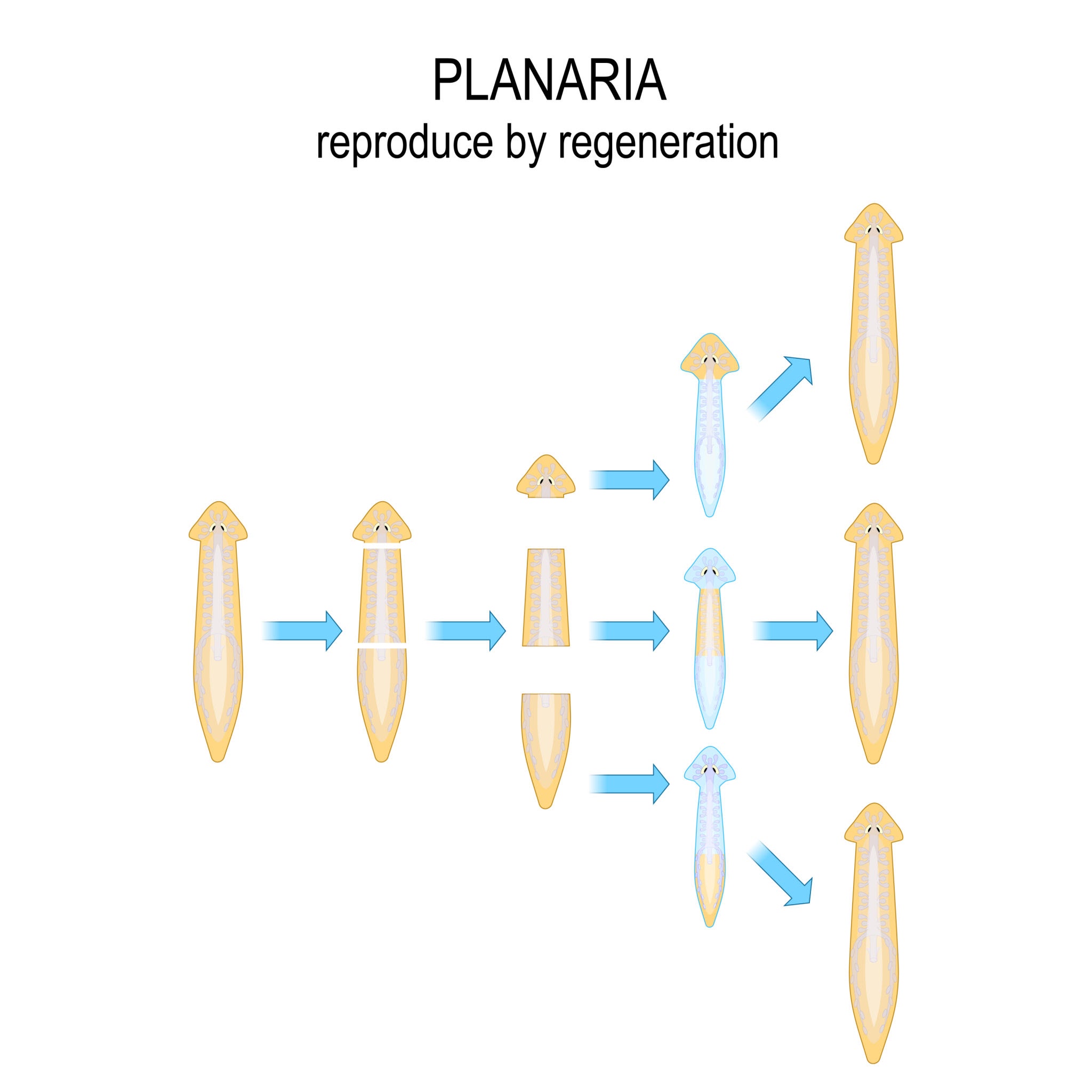
- Binary Fission: An organism splits into two parts and regenerates missing portions, as seen in Planarians (flatworms).
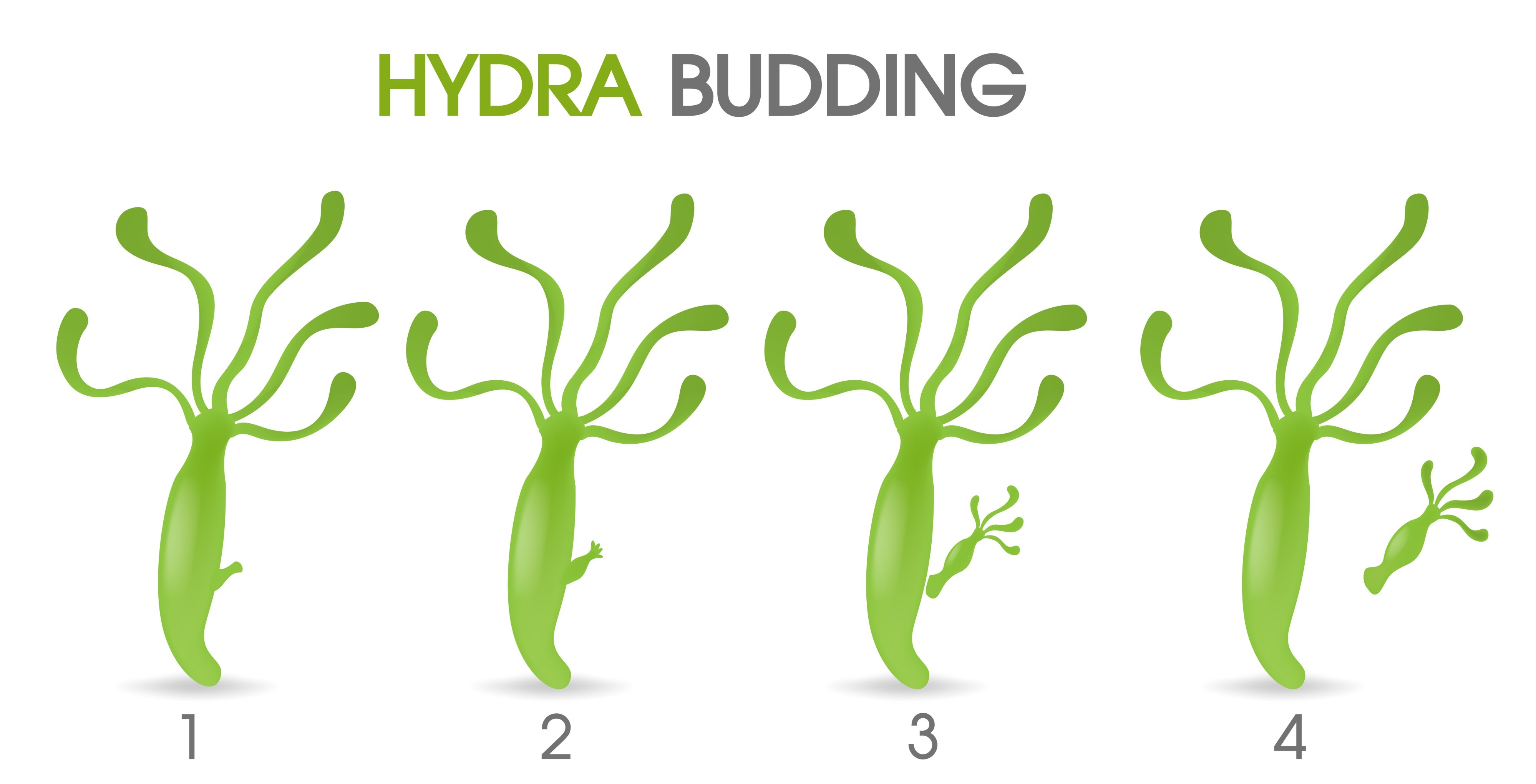
- Budding: An outgrowth (bud) forms on the parent, eventually detaching as a new individual. This is common in Hydras and Corals.
- Parthenogenesis: An egg develops into an individual without fertilization. This occurs in bees (to produce haploid drones), ants, and some reptiles.
B. Sexual Reproduction in Animals
This process combines genetic materials from two parents through the fusion of a sperm and an egg (fertilization).
This process combines genetic materials from two parents through the fusion of a sperm and an egg (fertilization).
- Fertilization occurs in two ways:
- External Fertilization: Eggs and sperm are released into aquatic environments where fertilization takes place.
- Internal Fertilization: Typically found in terrestrial animals, where sperm is deposited directly or indirectly into the female's reproductive tract.
- Post-fertilization Offspring Production:
- Oviparous: Fertilized eggs are laid outside the body, usually in shells (e.g., birds, reptiles).
- Ovoviparous: Eggs hatch inside the female body (e.g., sharks, certain snakes).
- Viviparous: Young are born alive and nourished by the female (e.g., most mammals).
Heredity: The Science of Inheritance
Heredity is the transmission and expression of traits from parents to offspring via chromosomes.
Mendelian Laws of Genetics
Gregor Mendel, the "Father of Genetics," used garden peas (Pisum sativum) to discover how traits are passed down. He formulated two essential laws:
Gregor Mendel, the "Father of Genetics," used garden peas (Pisum sativum) to discover how traits are passed down. He formulated two essential laws:
- The Law of Segregation: Genes are responsible for individual development and are transmitted independently from one generation to another without alteration.
- The Law of Independent Assortment: When considering multiple factors, each character behaves as a separate unit and is inherited independently of others. Dominance vs. Recessive: In Mendel's experiments, a cross between pure-bred tall and short plants resulted in all tall plants (F1 generation). The tall trait was Dominant, while the suppressed short trait was Recessive.
The Theory of Evolution
Evolution describes the gradual changes living organisms undergo in response to their environment.
Lamarck vs. Darwin
Lamarck’s Theory: Proposed that new organs develop out of "need" and that characters acquired during a lifetime are inherited (e.g., giraffes stretching necks).
Darwin’s Theory (Natural Selection): Proposed that individuals with adaptive characteristics best fitted for the "struggle for existence" survive and pass those traits to offspring.
Darwin’s Theory (Natural Selection): Proposed that individuals with adaptive characteristics best fitted for the "struggle for existence" survive and pass those traits to offspring.
Key Genetics Terminologies
1. Reproduction: Process of giving rise to offspring to ensure species continuation.
2. Gene: Physical unit of inheritance responsible for controlling characters.
3. Chromosomes: Strands of genetic material found in the nucleus that carry genes and consist of DNA and protein.
4. Character or Trait: Inheritable attributes or features possessed by an organism, such as height or skin color.
5. Gametes: Haploid cells produced by meiosis for sexual reproduction.
6. Genotype: The genetic makeup or constitution of an individual.
7. Phenotype: The sum total of all observable features (physical and behavioral) of an organism.
8. Dominant Character: A trait that is expressed in an offspring even when contrasting characters are crossed.
9. Recessive Character: A trait from one parent that is masked or suppressed in the presence of a dominant gene.
10. Homozygous: Individual with identical alleles for a trait (TT or tt).
11. Heterozygous: Individual with two different alleles for a trait (Tt).
12. Hybrid: An offspring resulting from a cross between parents that are of the same species but genetically different.
13. Locus: The specific site or location of a gene on a chromosome.
14. Haploid (n): When an organism has only one set of chromosomes in its reproductive cells (gametes).
15. Diploid (2n): When an organism has two sets of chromosomes in its body cells, as seen in most animals and plants.
16. Mutation: An inheritable change in an organism's genetic makeup.